
Buying a recreational vehicle generator is one of the most important decisions you will make for life on the road. The right unit keeps your air conditioning running, your refrigerator cold, and your electronics charged whether you are parked at a campground or boondocking miles from the nearest hookup. The wrong one leaves you undersized, overheating, or dealing with noise complaints from neighboring sites.
Here is what to know before you buy.
Step 1: Understand Your Power Needs
Before looking at any generator specs, make a list of the appliances and systems you plan to run simultaneously. The most common loads in an RV include:
- Rooftop air conditioning unit
- Refrigerator and microwave
- Water heater
- Interior lighting and USB charging
- Entertainment and electronics
Add up the running wattage of everything you would use at the same time. That number is your baseline. Your generator needs to handle that load comfortably while leaving some headroom for appliance startup demands.
Step 2: Choose the Right Fuel Type
Diesel is the right choice for a recreational vehicle generator that will see regular, sustained use. Diesel engines are built for continuous duty, burn fuel more efficiently under sustained load, and store better than gasoline between trips. For RV owners with a diesel vehicle, a diesel generator also means a single fuel type for the entire rig, which simplifies refueling on the road significantly.
Step 3: Decide Between Built-In and Portable
Portable generators are inexpensive upfront but come with real limitations, including manual setup every time you use them, separate fuel storage, higher noise output, and no ability to run while driving. For Class A, B, and C motorhome owners who travel frequently or spend time off-grid, a permanently installed built-in generator can provide a more integrated long-term power solution.
A built-in diesel RV generator integrates directly with your vehicle’s fuel system, starts from a control panel inside the coach, and is designed for quiet operation in RV applications.
Step 4: Consider Installation Space
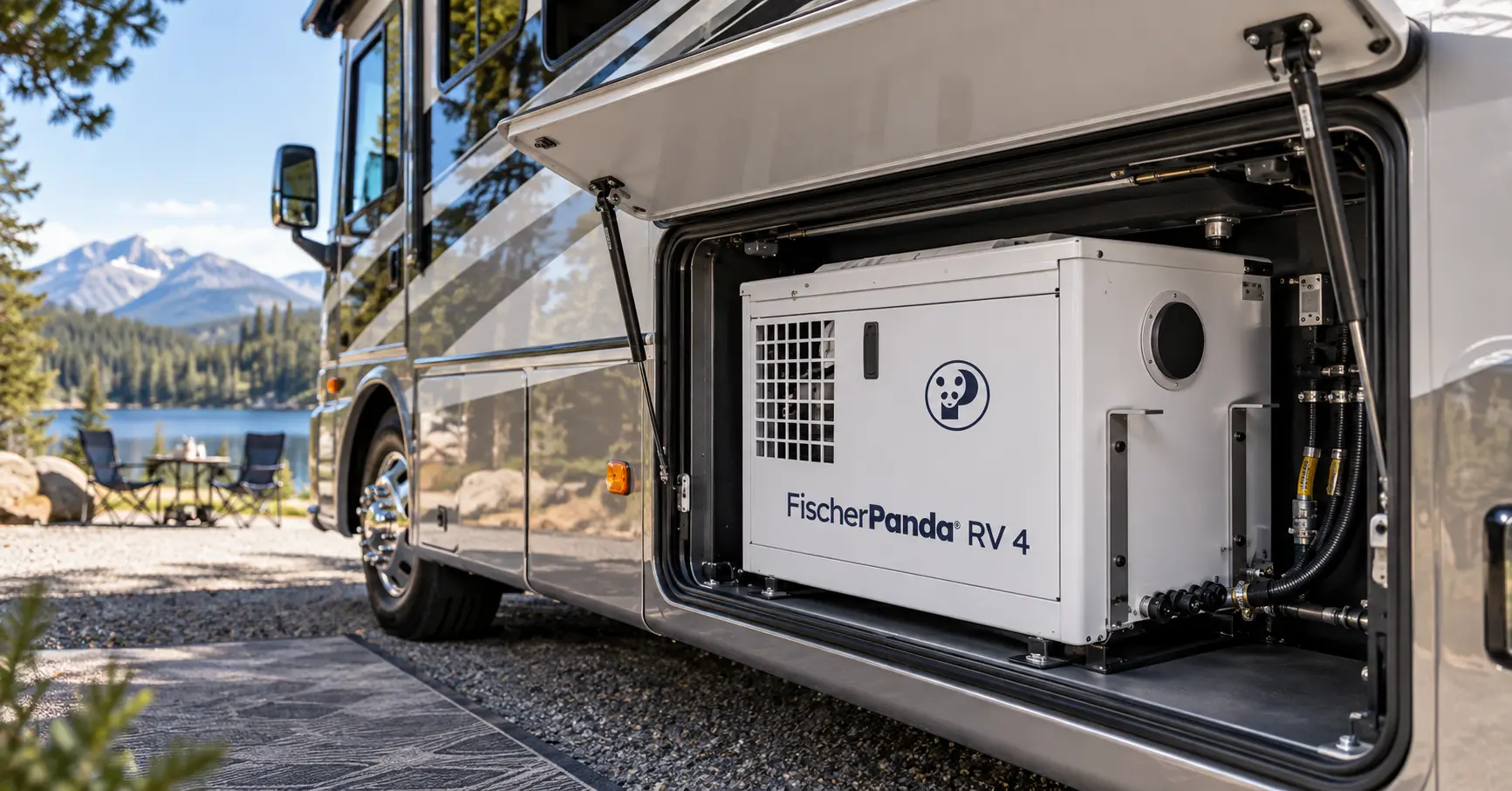
Not all generator bays are the same size. Before selecting a model, confirm the generator’s dimensions match your available compartment space. Fischer Panda’s RV generators are built with a compact footprint designed to accommodate space-conscious installations, making them a practical option for both new installations and replacement upgrades.
Step 5: Look at the Control System
Modern RV diesel generators do more than simply produce power. Fischer Panda’s RV4 AC features advanced digital controls, remote start capability, and RVC compatibility for seamless OEM integration. These features provide greater convenience, flexibility, and ease of operation.
The Fischer Panda RV4 AC
For Class A, B, and C motorhomes with standard comfort loads, the Fischer Panda RV4 AC delivers 4 kW of clean, stable AC power through a water-cooled Kubota twin-cylinder diesel engine. It is designed for reliable, quiet operation across a wide range of temperatures and elevations, making it a strong option for different RV travel applications.
The RV4 AC is backed by a 5-year limited warranty and supported by Fischer Panda’s U.S.-based technical support team, Ethan AI Assistant for 24/7 guidance, and a nationwide network of authorized dealers.
Find the Right Recreational Vehicle Generator
To explore Fischer Panda’s recreational vehicle generator options or speak with a specialist, call 1-800-508-6494.

Instant answers, expert support—right from your pocket. Download the Fischer Panda Ethan App now.