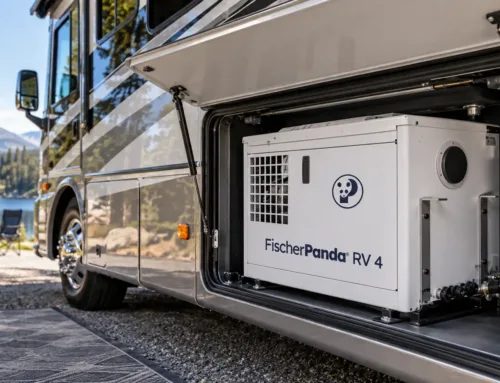
Choosing a power source for your RV generator is a decision that affects everything from how far you can travel to how often you need to service the unit. Diesel and propane are both established options with real-world track records in the RV space. Understanding how they compare across the factors that matter most helps you make a choice that fits your travel style and setup.
Fuel Availability
Diesel is available at virtually every truck stop, fuel station, and highway exit across the country. For RVs on a diesel chassis, the generator can draw directly from the vehicle’s main fuel tank, eliminating the need for a separate supply altogether.
Propane requires dedicated tank storage and periodic refills at RV parks, hardware stores, or propane suppliers. Availability is generally good in populated areas, but can be harder to source on remote routes or during busy travel seasons when demand is high.
Energy Density and Runtime
Diesel contains roughly 30 to 35% more energy per gallon than propane. This means more usable power from the same amount of fuel, directly reducing fuel consumption over time. For RV owners running air conditioning, refrigeration, and electronics simultaneously, that efficiency difference adds up over a long trip.
Because propane has lower energy density, it requires more fuel volume to generate the same electrical output as diesel, resulting in a higher real-world cost per kilowatt-hour, particularly during extended operation.
Installation and Space Requirements
Diesel generators are self-contained units that integrate directly into the vehicle’s existing fuel system on a diesel chassis. They require a generator bay with adequate ventilation and exhaust routing, but no additional fuel storage infrastructure.
Propane systems require dedicated onboard tanks, which take up storage space and add weight. Tank sizing has to balance runtime needs against the space and weight constraints of the specific vehicle. For smaller RVs and camper vans where every cubic foot matters, this tradeoff can be a meaningful consideration.
Performance in Cold Weather
Diesel fuel delivery is consistent across a wide range of temperatures and is not affected by pressure changes as the tank empties. Propane delivery can be affected by temperature, with pressure loss in cold weather potentially affecting performance. For RV owners who travel in colder climates or at higher elevations, this is worth factoring into the decision.
Air Quality and Indoor Environment
This is one consideration among several rather than a deciding factor on its own. Diesel generators are external systems with fully enclosed exhausts routed away from the living space. Propane systems, when properly installed and maintained, also operate safely in an RV context. As with any fuel-burning system, proper ventilation, working detectors, and routine inspections are essential regardless of fuel type.
Maintenance
Diesel engines generally require less frequent maintenance than propane engines, and Fischer Panda generators are designed with accessible service points for easy upkeep. Propane generators have simpler combustion systems but require periodic tank inspections, valve checks, and regulator maintenance as part of their upkeep.
Which Is Right for Your Rig?
Neither system is universally superior. The right choice depends on your chassis type, travel range, storage constraints, and how you use your RV day to day. Diesel tends to suit long-distance travelers, full-timers, and diesel-chassis owners well. Propane can work effectively for RV owners with existing propane infrastructure who stay closer to refill points.
If you are weighing options for your specific setup, Fischer Panda’s team can help you evaluate what makes sense. To speak with a specialist, visit fischerpanda.com or call 1-800-508-6494.