
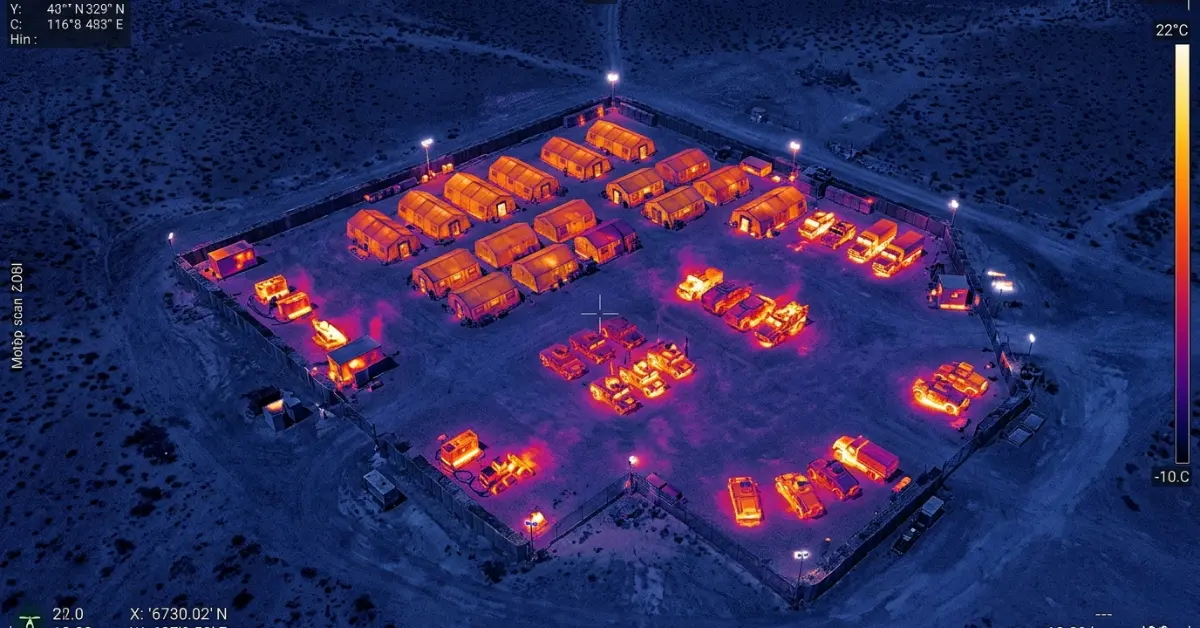
Modern battlefields are monitored in ways that go far beyond the visible spectrum. Thermal imaging systems, infrared sensors, and aerial surveillance platforms can detect heat emissions from equipment, vehicles, and installations with high precision at significant distances. In this environment, a generator that runs hot is not just an inefficient piece of equipment, it is a liability that can expose a position.
What Infrared Signature Actually Means
Every piece of heat-generating equipment emits infrared radiation. The intensity and pattern of that emission is its IR signature. Thermal imaging systems used by adversaries, surveillance drones, and target acquisition platforms all rely on IR signatures to detect and identify sources of activity.
How Fischer Panda Reduces IR Signature
Fischer Panda addresses IR signature through a combination of engineering choices that work together rather than relying on a single solution.
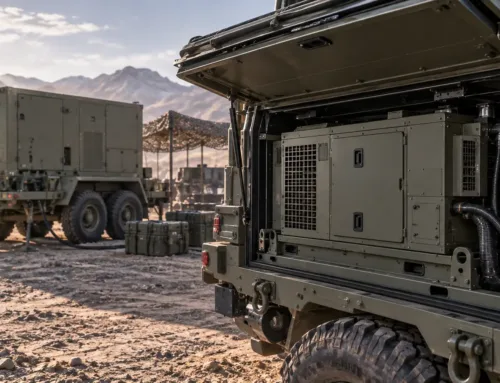
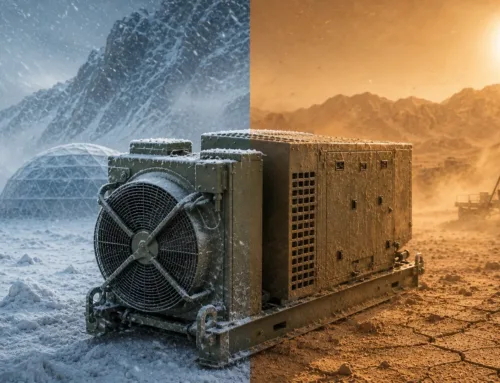
The core approach starts with liquid cooling. Through effective water cooling and installation in a sound-insulated housing, Fischer Panda generators operate quietly, are practically vibration-free, and maintain a minimal thermal signature. Because the cooling system manages heat internally through a closed loop rather than venting it directly into the surrounding environment, the external heat emission is dramatically reduced compared to air-cooled alternatives.
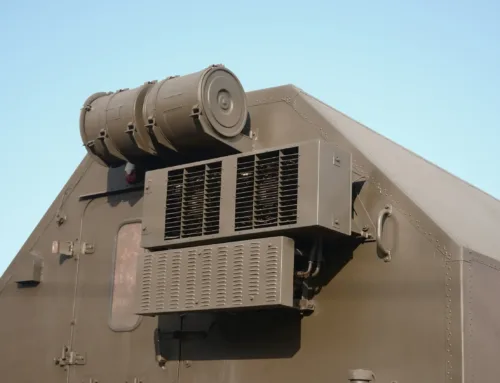
- A fully encapsulated design and liquid-cooled exhaust muffler work together to reduce IR detection
- Generators are difficult to detect by infrared devices due to the effective insulation built into the enclosure
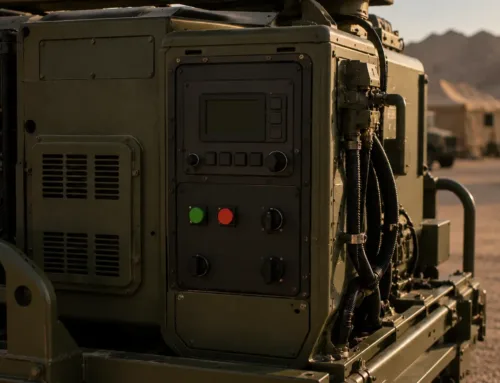
- The PE-150 28V DC generator is EMC and IR tested, meeting the specific requirements for electromagnetic and infrared signature control
Thermal Stealth as Part of a Broader Signature Management Strategy
IR signature does not exist in isolation. Effective signature management in modern operations requires controlling acoustic, electromagnetic, and thermal outputs simultaneously. Fischer Panda’s SST-10, for example, is designed with all three factors in mind: acoustic, thermal, and electromagnetic, helping reduce operational risk while maintaining reliable power output.
Proven in the Field
For defense procurement teams evaluating generator power systems with low IR signature requirements, Fischer Panda’s engineering staff can discuss specific mission parameters and configure solutions to match.

Instant answers, expert support—right from your pocket. Download the Fischer Panda Ethan App now.