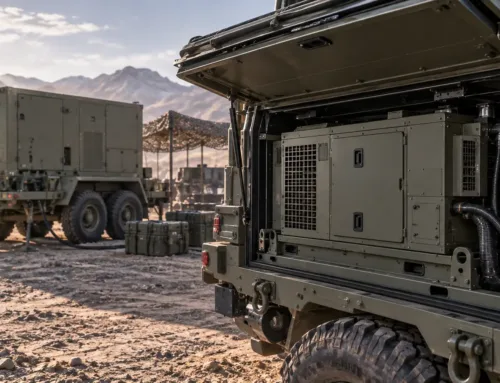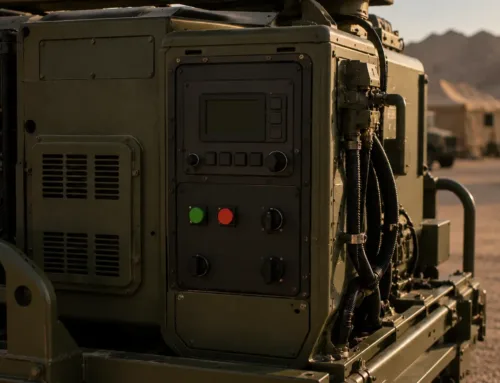

When a generator is deployed in a military environment, civilian performance standards are not enough. Defense applications demand compliance with a set of strict military standards, known as MIL-STD, that govern everything from electromagnetic emissions to how a unit handles extreme temperatures. For procurement officers, defense engineers, and program managers evaluating power systems, understanding what these standards require is essential to making the right decision.
Fischer Panda is experienced with designing and constructing generators to meet a wide range of MIL-STD requirements, specifically MIL-STD-810and MIL-STD-461, with particular focus on EMI levels, IR signatures, exhaust emissions, and operating sound levels.
Here is what each of those areas means in practice.
MIL-STD-461: Electromagnetic Interference
MIL-STD-461 governs electromagnetic interference, or EMI. In a tactical environment, a generator that emits uncontrolled electromagnetic energy can interfere with radio communications, navigation systems, and sensitive electronic equipment on the same platform or nearby.
A generator meeting MIL-STD-461 requirements is engineered to contain its electromagnetic emissions within acceptable limits and to resist interference from external sources. Fischer Panda’s AGT5000PE-150N, for example, is EMI hardened and shielded against electromagnetic interference for communication integrity. For platforms running command and control systems or communications equipment, this level of shielding is not optional.
MIL-STD-810: Environmental Durability
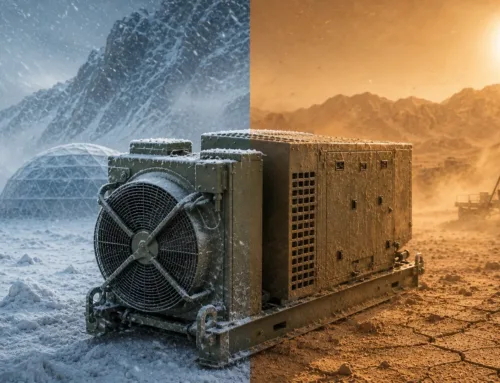
MIL-STD-810 covers the environmental conditions a piece of equipment must survive and continue operating through. This includes:
- Extreme temperature ranges
- Humidity, rain, and immersion
- Vibration and mechanical shock
- Altitude and pressure changes
- Dust and sand exposure
Generators deployed in military applications must be capable of running 24 hours a day, 7 days a week, with total reliability. They must start at below minus 45 degrees Celsius and operate with high efficiency up to at least 55 degrees Celsius at approaching 10,000 feet above sea level. Sandstorms, rain, and snow should have no adverse effect on the generator. MIL-STD-810 testing validates that a unit can meet these conditions before it ever reaches the field.
IR Signature: Thermal Stealth
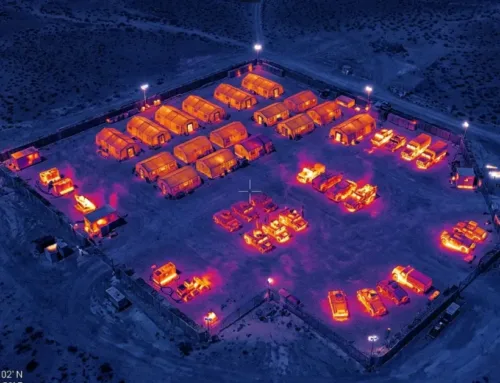
Infrared signature refers to the heat a generator emits and how detectable it is to thermal imaging systems. In a tactical environment, a high IR signature can compromise the position of a vehicle or installation.
Through effective use of water cooling and installation within a sound-insulated housing, Fischer Panda generators operate quietly, are practically vibration-free, and maintain a minimal thermal signature. The fully encapsulated design and liquid-cooled exhaust muffler further reduce IR detection.
Sound Levels: Acoustic Signature
Noise discipline is a critical operational requirement in many military contexts. A generator that is clearly audible at distance creates a tactical liability. The Fischer Panda SST-10, for example, operates at approximately 57 dBA at 23 feet, a level quieter than normal conversation, while delivering 10 kW of power for mission-critical systems.
Custom Engineering for Mission Requirements
Not every deployment has the same requirements. Fischer Panda’s comprehensive internal design engineering staff is highly qualified and experienced in unique and custom designs. Fischer Panda is fully export-compliant and registered with the US State Department.
Fischer Panda Generators also offer versatile fuel compatibility, running on diesel, JP-5, or JP-8 military fuels, with extended service intervals of over 250 operating hours between maintenance cycles.
For defense procurement inquiries or to discuss custom generator requirements, contact Fischer Panda directly at fischerpanda.com or call 1-800-508-6494.

Instant answers, expert support—right from your pocket. Download the Fischer Panda Ethan App now.