
Choosing the right marine generator is one of the most important decisions a boat owner can make. Powering everything from navigation systems and refrigeration to air conditioning and communications requires a unit that’s efficient, reliable, and quiet.
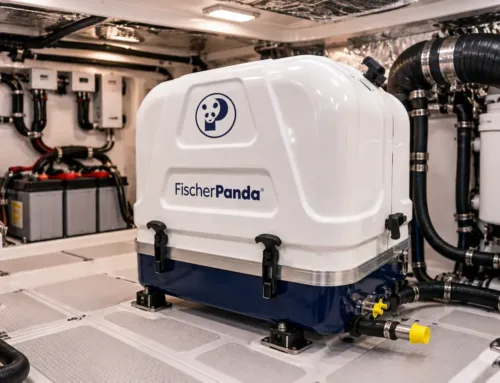
Fischer Panda, known worldwide for its compact, fresh-water-cooled diesel generators, has once again raised the bar with its newest inverter marine generators: the Panda 3.5e and Panda 5.5e. These models deliver clean, stable power, offering a level of comfort and efficiency unmatched by traditional generators.
In this guide, we’ll explore how inverter marine generators work, how they compare to traditional systems, and why Fischer Panda’s latest models represent the future of marine power.
What Is an Inverter Marine Generator?
An inverter marine generator converts raw AC power into DC, then inverts it back to stable, pure sine-wave AC power.
Key Advantages:
-
Wave Perfect Power: Perfect for sensitive electronics like GPS, chart plotters, and radar systems.
-
Fuel Efficiency: Optimized speed technology means the generator burns only as much fuel as needed.
-
Reduced Noise: Lower RPM equals quieter operation, often as low as 54 dBA at 23 feet.
-
Compact Design: Inverter generators are smaller and lighter, making them ideal for tight engine rooms.
In short, inverter technology transforms your generator into an intelligent, responsive power source that enhances onboard comfort while minimizing environmental impact.
Meet Fischer Panda’s Newest Inverter Generators
Fischer Panda’s newest inverter models: the Panda 3.5e Generator and Panda 5.5e Generator, are designed specifically for modern marine applications where space, silence, and efficiency are top priorities.
Panda 3.5e Generator
Compact yet powerful, the 3.5e is ideal for small boats with moderate power requirements. Its inverter technology ensures smooth, quiet operation and dependable power for onboard essentials like refrigeration, lighting, and navigation.
Panda 5.5e Generator
For larger vessels, the 5.5e delivers increased output while maintaining the same quiet operation and compact footprint. With smart diagnostic features and a freshwater-cooled Kubota diesel engine, it’s the perfect solution for cruisers demanding premium performance.
Shared Advantages of Both Models
-
Ultra-Quiet Operation: 54 dBA @ 23 feet.
-
Compact Dimensions: Up to 30% smaller and 50% lighter than standard units, and built with a lower deck height.
-
Smart Diagnostics: Text-based display provides clear service and performance data.
-
Freshwater Cooling: Ensures longer lifespan and reduced wear.
-
Reduced Emissions: Lower RPMs mean cleaner operation and lower environmental impact.
These inverter systems are Fischer Panda’s most advanced marine generators to date – purpose-built for the next generation of boating.
Traditional Marine Generators: Proven Power for Continuous Loads
While inverter generators excel in efficiency and quietness, traditional AC generators still play an essential role for larger boats and high-demand systems. Fischer Panda’s AC Mini Series, including the AC 8 Mini, AC 12 Mini DP, and AC 15 DP, are built for yachts and commercial vessels that require continuous, high-output power.
Key Features of Traditional Generators:
-
Constant RPM Output: Reliable, stable AC power for multiple systems.
-
Asynchronous Alternator Design: No brushes or diodes, less maintenance and longer service life.
-
100% Freshwater-Cooled: Both engine and alternator cooled for optimal performance.
-
Durable Construction: Designed to run continuously under heavy load.
These models remain the top choice for large powerboats, liveaboards, and commercial operators who prioritize total output capacity and endurance.
Inverter vs Traditional Marine Generator: Key Differences
| Feature | Inverter Marine Generator (3.5e / 5.5e) | Traditional Marine Generator (AC Mini Series) |
|---|---|---|
| Power Quality | Pure sine wave: ideal for sensitive electronics | Standard AC output: minor fluctuation under load |
| Engine Speed | Optimized (2800 – 3000 RPM) | Fixed RPM (typically 3600) |
| Noise Level | Extremely quiet (54 dBA) | Moderate (54–60 dBA) |
| Fuel Efficiency | Higher: fuel use based on load | Lower: constant fuel draw |
| Size & Weight | Compact and lightweight | Larger, heavier footprint |
| Maintenance | Low: digital system diagnostics | Low: proven mechanical reliability |
| Best For | Smaller boats, cruisers, and weekenders | Larger yachts and commercial vessels |
When to Choose an Inverter Marine Generator
Choose an inverter model like the Panda 3.5e or 5.5e if you:
-
Sail or cruise in noise-restricted areas or marinas.
-
Need quiet operation for comfort during overnight anchoring.
-
Have limited engine-room space.
-
Want better fuel economy and lower emissions.
-
Operate sensitive electronics that require consistent voltage stability.
When to Choose a Traditional Generator
Opt for an AC Mini Series generator if you:
-
Need continuous, high-output power for multiple cabins or A/C units.
-
Run long passages where power demand stays high.
-
Operate commercially or full-time and require maximum durability.
-
Want field-proven reliability in harsh marine conditions.
Fischer Panda: Innovation That Powers the Future of Boating
For decades, Fischer Panda has led the marine power industry with its commitment to quiet, efficient, and compact diesel generator systems.
The Panda 3.5e and Panda 5.5e represent the future of marine energy, pairing inverter precision with the durability of Fischer Panda’s liquid-cooled design. Whether you’re navigating coastal waters or crossing oceans, these new inverter generators ensure smooth, silent, and dependable power wherever your voyage takes you.

Instant answers, expert support—right from your pocket. Download the Fischer Panda Ethan App now.