
A marine diesel generator is one of the hardest working systems on board, often running for hours at a time to power navigation equipment, refrigeration, lighting, and comfort systems. Because these generators operate in demanding environments and handle continuous electrical loads, their long-term durability becomes an important part of every boater’s planning. Understanding how long a marine diesel generator can realistically last helps boat owners determine maintenance schedules, evaluate reliability for extended cruising, and decide when it may be time to consider an upgrade.
Below, we break down average generator lifespans, the factors that influence durability, and the best practices for extending the life of your system.
What Is the Average Lifespan of a Marine Diesel Generator?
Marine Diesel Generator Lifespan Depends Heavily on Use and Maintenance
A marine diesel generator does not have a fixed lifespan. Service life varies widely based on how the generator is operated, maintained, and installed.
With proper maintenance, correct loading, clean fuel, and adequate ventilation, a quality marine diesel generator can provide many years of reliable service.
In practice, many generators fail prematurely due to misuse, improper loading, poor ventilation, or neglected maintenance. These factors can significantly shorten service life, sometimes well before high hour counts are reached.
Key factors affecting generator longevity include:
- Brand and build quality
- Cooling system design (freshwater-cooled systems generally last longer)
- Operating habits and load management
- Engine room ventilation
- Fuel quality
- Maintenance intervals and service practices
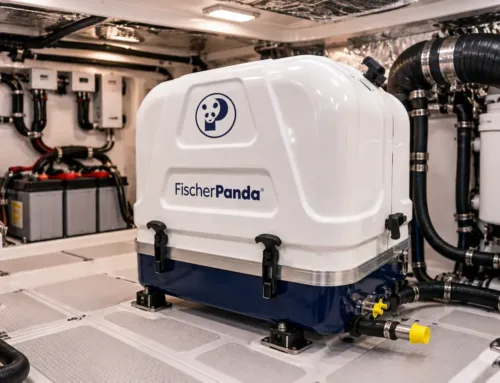
For example, freshwater-cooled systems like those offered by Fischer Panda often run quieter, cooler, and more efficiently, which naturally supports a longer lifespan.
If you want to explore compact, freshwater-cooled systems, you can browse the full lineup of marine generator options here.
Why Marine Diesel Generators Last Longer Than Gasoline Generators
Diesel systems deliver longer life for several key reasons:
1. Simpler Engine Design
Diesel engines use compression ignition, meaning they rely on air, fuel, and compression. No spark plugs or ignition systems required.
Gasoline generators (and propane generators as well) are spark-ignition systems. They depend on precise air-to-fuel ratios, spark plugs, ignition components, throttle or butterfly valves, and more complex fuel delivery systems.
More components mean more potential failure points and more variables to troubleshoot over time.
2. Fuel Characteristics Matter
Diesel fuel offers natural lubricating properties that help protect internal engine and fuel system components.
Gasoline and propane lack this lubricity and rely more heavily on tightly tuned ignition and fuel systems, which can be sensitive to wear, contamination, or improper adjustment.
3. Better Thermal Efficiency for Long Run Times
Diesel engines are designed for continuous operation and handle sustained electrical loads efficiently. In marine environments, where generators often run for extended periods, this efficiency translates into less heat stress and improved longevity.
4. Heavier-Duty Internal Components
Because diesel engines operate under higher compression, they are built with reinforced pistons, bearings, crankshafts, and engine blocks. These components are designed for endurance, not intermittent use.
For boat owners who rely on their generator for extended cruising or frequent onboard power, diesel remains the proven choice for long-term reliability.
How Load Impacts Generator Lifespan
Many boaters underestimate how important load management is for generator longevity.
Running at Too Low a Load
Extended operation at very light electrical loads can result in:
- Incomplete combustion
- Carbon buildup inside the engine
- Reduced fuel efficiency
Running at Proper Load
The ideal load range for most marine diesel generators is:
40 to 80 percent capacity
This keeps exhaust temperatures high and combustion clean.
Running at Too High a Load
Consistently running above 80 percent capacity can reduce lifespan and stress electrical components.
Maintenance Cycles That Extend Lifespan
A generator lasts as long as its maintenance schedule allows. The most important service intervals include:
-
Oil changes every 100 to 150 hours
-
Fuel filter changes every 200 hours
-
Impeller inspection each season
-
Coolant flush depending on hours
-
Belt and hose checks
-
Clean electrical connections
-
Ventilation and airflow checks
Freshwater-cooled generators require less corrosion-related maintenance, which directly supports longer operating life compared to raw-water-cooled systems.
Environmental Conditions That Affect Lifespan
Marine generator performance is influenced by:
1. Engine Room Temperature
High heat reduces efficiency and accelerates wear.
2. Moisture Levels
Salt air and humidity accelerate corrosion unless properly protected.
3. Vibration and Mounting
Soft mounts and balanced installation keep components aligned and stable.
4. Noise and Exhaust Design
Advanced sound shielding and efficient exhaust routing reduce mechanical strain.
Fischer Panda generators use compact design, freshwater cooling, and sound enclosures that maintain quiet performance, which also supports long-term durability.
Signs Your Marine Generator Is Nearing the End of Its Lifespan
Knowing what to look for helps you plan a replacement before failure occurs. Common warning signs include:
-
Hard starting
-
Excessive vibration
-
Rising oil consumption
-
Drop in power output
-
Unstable voltage
-
Frequent shutdowns
-
Increased fuel consumption
-
Noticeable exhaust changes
If you notice multiple symptoms, a service evaluation is recommended.
How to Make a Marine Generator Last Longer
Here are the best ways to maximize your generator’s lifespan:
1. Run at Proper Load
Operate within the 40 to 80 percent range whenever possible.
2. Keep Fuel Clean
Use high-quality marine diesel and replace filters on schedule.
3. Maintain Proper Cooling
Ensure coolant levels are correct and strainers stay clean.
4. Improve Ventilation
Reduce engine room heat buildup to protect electronics and seals.
5. Follow a Strict Maintenance Schedule
Regular oil changes are the number one factor in generator longevity.
6. Choose a High-Quality Freshwater-Cooled System
Premium generators last longer and require fewer major repairs.
Final Answer: How Many Hours Will a Marine Diesel Generator Last?
A marine diesel generator can provide many years of reliable service and far longer when maintained properly. Diesel technology is built for endurance, and modern freshwater-cooled generators deliver better performance, quieter operation, and extended lifespan.
For boaters looking for a compact, quiet, and long-lasting generator, Fischer Panda offers some of the most durable marine diesel systems available today.
Explore the full range of marine generators here.

Instant answers, expert support—right from your pocket. Download the Fischer Panda Ethan App now.